The Lemkos and the Lemko Region
Anna and Szymom Choroszczak,
from Bogusza, Nowy Sącz 1890
Lemkowszczyna [the Lemko region] is the region sandwiched between Polish and Slovak ethnic territory. On the northern side of the Polish-Slovak border, it covers the terrain of Beskidy Sadeckie, the Lower Beskidy, and the western Bieszczady; or according to the division of pre-war [WWII] Poland, the southern parts of the Nowy Targ, Nowy Sacz, Gorlice, Jaslo, Krosno, Sanok, and a section of Lesko regions [counties].
People living in this area are called Rusyns [commonly referred to as Ruthenians] (not to be mistaken with Russians), also known as Lemkos. The ethnic name ‘Lemko’ supposedly first appeared in the 19th century. Originally, it was a nickname for those Rusyns who used the word ‘Lem’ [meaning only, just, or but] in their own language. However, with time, it lost its character as a nickname and became a word used often in popular and educational literature. Likewise, Lemkos themselves gradually began using the terms ‘Rusnak’ or ‘Rusyn’ in common speech.
|
Lemko family "Koban" from Bogusza, Nowy Sacz c. 1890. (Choroszczak, in pamphlet) |
|
|
The controversy lies in where the Lemkos first originated from. Ukrainian ethnographers believe that Lemkos are the first descendants of Rus to settle in mid-Carpathia, while Polish ethnographers link them with the Hungarian [woloskie] settlers from the 14th to 16th centuries. The Lemkos themselves believe that they are the descendants of the East Slavic tribes of the White Horvaths.
|
Parishoners in front of the Orthodox church in Piorunce, c. 1935 |
|
|
There are disagreements about the identity of the Lemko language and culture. To understand it, it is necessary to research the history of the Lemkos from at least the mid-19th century. To clear up confusion, it may be said that today Lemkos are divided into two groups. One group considers itself as only Lemko, and highlights its connection with the rest of the Rusyns in the Carpathia and the Baczwanskie Rusyns in Yugoslavia. The other group considers itself an ethnic group of Ukrainian nationality.
The population of the Lemkos in Poland was estimated in 1930 to be about 100-150,000, living in about 170 villages, according to the approximate border of the eastern Lemko region.
Orthodox and Greek Catholic churches play an essential role in the Lemkos’ life. To this day, the church continues its traditional functions, playing a cultural as well as an integral role.
|
Blessing of water (Jordan, Rymanow, c. 1935) |
|
|
The main ocupation of Carpathian Rusyns was agriculture. Animal husbandry was also important. People tried to improve their hard life by deriving income from sources other than farming: for example, production of grease (in Losie and Bielanka); production of furniture and artistic objects, such as souvenirs (in Leszczyny, Nowica, and Kunkowo); stonemasonry (in Bartne and Przegonina); smithing (in Olszyny and Ropa), basket-making; or cloth-making.
|
Mowing hay, Izby, c. 1930 |
|
|
On the whole Lemko territory, traditional wooden house construction dominated. Houses were often whitewashed or painted. Churches were similarly decorated, though much more elaborately.
|
Shepherd girl from Moszczanica, c. 1934 |
|
|
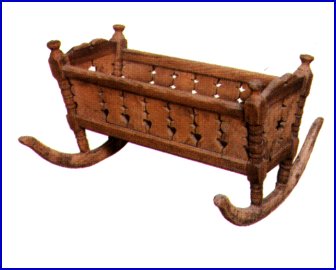
In the living quarters (chyza or izba) several items played major roles: a wide fireplace connected with the baking oven and house heater; the table; side benches; painted chests; a crib; a movable bed; in winter, a spinning wheel; and, above all, a row of icons hung on the wall.
|
Painted house in Leluchowo, photo. St. Leszczycki, c. 1934 |
|
|
|
Inside of a living quarters (chyza or izba) in Rychwald, 1934 (illustration from book "Śladami Łemków" wyd. PTTK "Kraj" 1990) |
|
|
|
Demianowicz family from Brunar dressed in attire characteristic to the western Lemko region, 1920 |
|
|
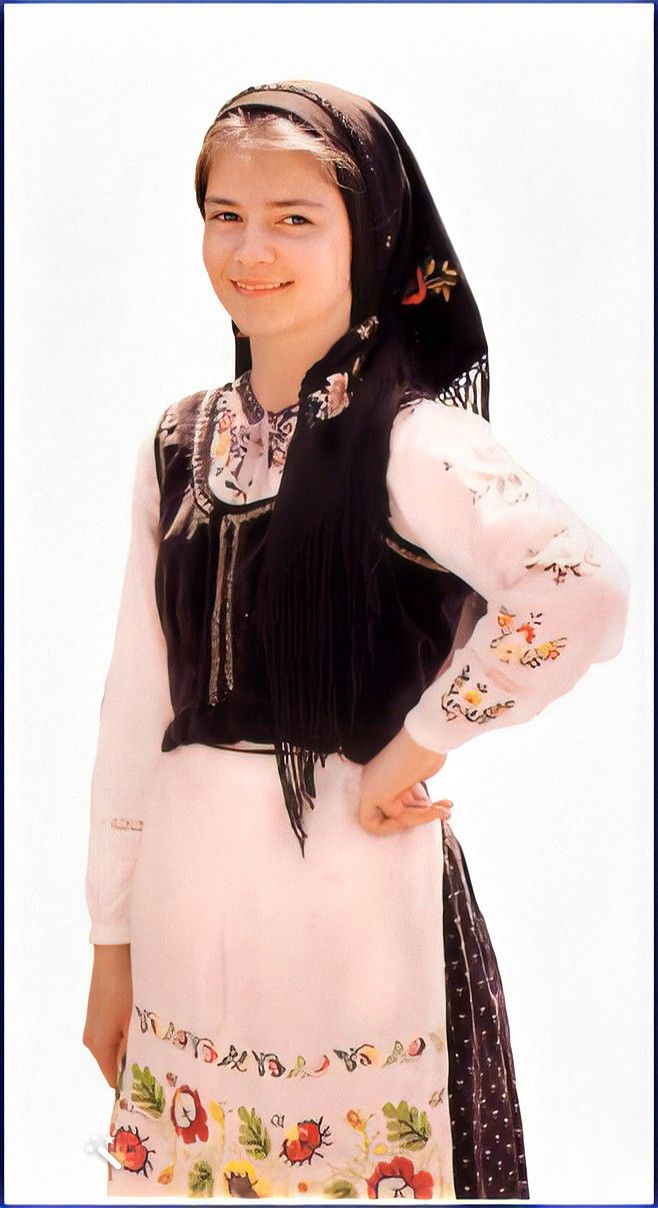
The most visible element of Lemko culture was their colorful attire. Clothes were not uniform regarding to cut, color, or decoration, although they consisted of the same elements in the whole Lemko region. The women’s dress consists of a linen shirt [oplycza], a skirt [kabat], a woolen or cloth embroidered vest [gorset or lajbyk], a scarf [facelyk], a jacket [hunia], and in winter, a short sheepskin jacket, and leather shoes [kierpci] or boots [trzewiki or skirni].The men’s clothes included a linen shirt [koszela]; linen or felt pants [nohawky or cholosni]; a vest [lajbyk, jacket [hunia], a coat [czucha], and a hat [uhersky] (all made from felt); and leather shoes (kierpci or chodaky).
|
Dress clothes from Wislok Wielki, eastern Lemko region, c. 1930, photo. St. Leszczycki |
|
|
Girls from Binczarowa in holiday clothes, 1937 |
|
|
Inscription on the foundation of the house in Muszynka, Nowy Sacz county, “Farwell my family home, farwell my village Muszynka, farwell village youth, farwell everybody. Muszynka, 4, 46" |
|
The everyday duties of family life were accompnied by rituals, customs, beliefs, and superstitions. These influenced the Lemkos’ outlook and attitude towards people and the nature.
The Resettling
The Lemkos were witnesses and partakers in many tragic events, mainly during last two wars (including the battle at Gorlice at the mountain pass in Dukla). However, the most tragic event was the resettlement that took place between 1944 and 1947. First, as a result of the agreement between Poland and the Soviet Union, about 70,000 Lemkos emigrated to Soviet Ukraine (sometimes willingly, though often under pressure). Then, in the spring and summer of 1947, the remaining 30,000 Lemkos were moved to western and northen Poland as a result of the “Operation Wisla [Vistula]” project. The historic Lemko region was no more.Together with the Lemko people disappeared their customs, rituals, traditions and beliefs. Gradually, the remnants of the Lemko culture deteriorated. Now, there is no sign of many Lemko villages. In other villages roadside chapels, with orthodox crosses (St. Andrews) [trident], and onion-shaped church domes (of churches usually transformed to roman catholic churches) testify as a reminder of the past Lemko existence. The Lemkos who chose not to move to Soviet Russia wound up mostly in Lower Silesia, as well as near Lubin and Olsztyn. In the west, the Lemkos were dispersed by few families in one village, with no more than few hundred in a county. People were not allowed to travel, to change place of residence, to meet together, and to educate their children in their own language or worship in their own (greek catholic) rite. Their arrival to new places of residence was often associated with rejection and animosity from their new neighbors. This was very different from the technical, cultural and civilizational conditions that they were used to in the mountains: they had to cope with different housing, different equipment and, most importantly, a new culture. Everywhere they felt their foreignness and difference. They felt bad physically and mentally as well, keeping in contact within their own, very small group.
They differed from the other setlers in their customs, attire, religion, and language. “People were laughing about our clothes, and our wooden carts; when we were talking in our own language, people would stick their fingers at us. Our children were called bandits, and they were forbidden to sit in the same bench at school,” Lemkos recall after many years.
With time the situation changed. Moreover, the Lemkos changed as well. To find out how much, it is best to trace the changes in Lower Silesia.
|
Document of resettlement of Meksym Gambal from the village Losie in vicinity of Krynica, July 1947 |
|
|
|
Certificate of release from working camp in Jaworzno. Maksym Gambal from the village Losie in the vicinity of Krynica, January, 1948 |
|
|
Assembly point in Grzybow. Displaced people from Bogusza, July, 1947 |
|
Displaced people from village Krzyrzowka, Nowy Sacz county after unloading in Tyniec Legnicki, Legnica county, July, 1947 |
|
Lemkos in Lower Silesia
According to the resettlement statistics, about 21,000 Lemkos were left in the region of Lower Silesia after Operation Wisla (Vistula) [according to the administrative borders from 1947]. Most of the settlers – (80-90 %) came from the Lemko region.
Counties with the largest Lemko populations were Lubin county- 2550, Legnica county- 2200, and Wolow county- 2800; at the beginning until the second relocation in 1948, as well as Olesnica county.
In spite of the order given by the MZO and MBP, in many villages the Lemkos were resettled in larger numbers than specified limits. For example, in Michalow, and Lisc (Lubin County), about 30 families were resettled. Other, larger conglomerations of Lemko people in that time in the Wroclaw province are Studzionki, Mojecice, Stary Wolow, Lososina, Krzydlina, and Lubiaz ( Wolow county); Bukowna, Wysoka, Rudna, Chrostnik (Lubin county), Jaroszowka camp, Zamienice, Rokitki (Zlotoryja county), Patoka, Modla, Gromadka (Boleslawiec county); Lasowice, Lisowice, Wagrodno, Legnickie Pole and Gniewomierz (Legnica county); as well as villages at Przemkowa and Szprotawa areas.
Traditional Lemko customs and practices survived the longest in this territory; for example, weddings with best men making occasional speeches; colorfully dressed bridesmaids and bridegrooms in their traditional clothes: beggarwomen ”dziadiwky” – men dressed in women’s clothes, brought to the bridegroom instead of the bride; or fairs [“keremesze”].
In the previously mentioned villages, one can easily find farming equipment, tools, old photographs, and family mementos brought from the mountains.
During the preparations for our exposition, we considered mainly two important aspects: first, we wanted to supply tourists with basic information about the Lemkos and their small fatherland — from where did they come and how they end up in Lower Silesia; second, we wanted to find the answer to what was left of the Lemkos after 50 years of living far from their mountain homeland, Lemkowyna. With full awareness for articles in our exposition we turned not to the museums or private antique collectors, but we decided on our own to search in “traditional” conglomerations of Lemkos in Lower Silesia.
|
Chocholak family from Bogusza after being displaced to Olesnica area, spring 1948 |
|
|
Lilianna Hurej and Bogdan Kapiec; members of the Lemko song and dance ensemble “Kyczera” from Komancza, dressed in native Lemko clothing, Legnica 1998 |
|
|
Wheat harvest in Trzmielow, Lubin county, 1948 |
|
|
Wedding “in” Wysoka, Lubin county, c. 1950 |
|
|
First Christening in Lisc, Lubin county, 1948 |
|
|
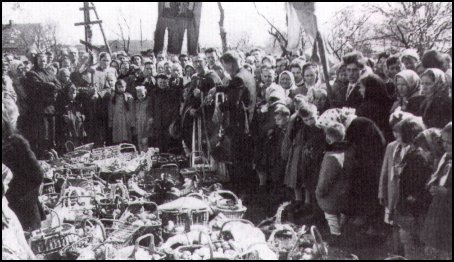
Blessing of food in front of church in Studzionki, Lubin county, c. 1970 |
|
|
Lemko children in front of a school building in Jaroszowka, Zlotoryja County, 1958 |
|
|
Eva Klimkiewicz, member of song and dance ensemble “Kyczera” in Legnica, dressed in original Lemko attire from the western Lemko region. Individual parts of the attire come from different parts of the region: the scarf and the vest are from Mochnaczka village (1915), the skirt and the shirt (blouse) are from Bartne (1900, 1935), and the apron is from Binczarowa (c. 1935) |
|
|
Report Card (Diploma) of Peter Markowicz from1924, village Nowa Wies, Nowy Sacz county |
|
|
Clay bowl for eating meals together: Wierchomla Wielka, Nowy Sacz county – donated by Stefan (Steven) Sobczyszak from Olszanica |
|
|
Oil press from Nowa Wies, Nowy Sacz county - 1930, donated by Lubomira Starzynska |
|
|
Grain mill (zorna), wesern Lemko region –1930, donated by Piotr Mikulak from Buczyna. |
|
|
Pysanky from Lemko (Bogusza town) and Silesia regions done by Tekla Slezion and Eva Wasacz, now citizens of Lubin |
|
|
“Proporec” – a symbol of the best men created by Stefania Wolenszczak from Ciechlowice, Rudna municipality |
|
|
Painted chest (lada) from Zmigrod – 1930, donated by Maria Klapacz from Bodnarka – now Kunice |
|
|
Crib from Zegiestow, Nowy Targ county, - c. 1920, donated by Stefan Sobczyszak from Olszanica |
|
|
Justyna Trochanowska, member of Lemko song and dance ensemble “Kyczera” from Legnica, dressed in original Lemkos attire from Swiatkowa Wiekla , Jaslo county, made in 1930 –donated by Maria Szkimba. Spinning-wheel (wizok) to spin wool and linen from Wierchomla Wielka, Nowy Sacz county – possession of Maria Keklak from Olszanica |
|
The pessimistic belief that no commemorative items of Lemko culture from previous years would be found in the western Lemko region proved false. Among the collected and presented items in the exposition, aside from carefully stored native attire and “Holy Icons”, one can find household equipment, such as painted chests, trunks, cribs, and even beds, brought to the west by the Czerep family from Binczarowa. Moreover, there are also grain mills, flax and wool processing equipment, ramaczy (wool processing equipment), cheese presses, different bowls to make dough, oil presses, “wire repaired” pots, and dishes.
|
Embroidered vest Nowa Wies, Nowy Sacz county – 1940 – posession of Stefania Jedynak from Bolutek |
|
|
Embroidered apron ( zapaska). Embroidery done by Olga Czerep from Binczarowa, Nowy Sacz county, 1935 |
|
|
Mirka Chanas dressed in sheepskin coat from Wierchomla Wielka –1940 – posession of Maria Keklak in Olszanica |
|
|
Embroidered blouse (oplycza), done by Maria Kozlak from Bartne, Gorlice county –1935 |
|
|
Embriodered blouse –sleeve- done by Stefania J. from Nawa Wies, Nowy Sacz county – 1940 |
|
|
"Triod” (a Bible) from 1778, Orthodox church posession from Lubin |
|
|
Wooden crucifix with writing on the lower part: “Memoir from captivity, 1917, Talerhoff” made by Jozafat Krajniak – donated by Melania Zuk from Lubin |
|
|
Chalice from late 17-century – possession of the Orthodox church in Lubin |
|
|
Inside of Orthodox church in Michalow, Chocianow municipality – 1998 |
|
|
Crib - “Wertep w Karpatach”- (Christmas play) performed by actors of the Theatrical Organization of Lemkos in Legnica, 1992 |
|
From all of the presented items, a clay bowl from Wierchomla deserves a symbolic place. It was brought to the west by the Sobczyszak family. For many years after resettlement, it was used by its owners to eat together. A wooden cart from Bednarka has similar symbolic meaning donated by Tylawski family from Kunice, with a date of 1947 carved on the beam.
Numerous photographs and old documents illustrate the life of former Lemko region and the first years of their settlement in the western Poland. Collected material for our exposition accounts for a few hundred items. Among those items one can find real treasures, like documents of Apostolic Administration of Lemko land, photographs of the “government” of the Rusyn Republic of Lemkos in Florynka, Indictment of Lemko leaders by the Army prosecutor in Wieden (Vienna) from 1916, and family photographs from the end of 19th and the beginning of the 20th centuries.
Articles illustrating Lemko life from the religious side include books from 16 and 17 century (from Tylicz), liturgical dishes (unknown origin), church banners (from Bartne), crowns used during wedding ceremonies (from Florynka), prayer books, big and small crosses, and family icons.
|
Lemko song and dance ensemble “Kyczera”, performing in Drama Theater in Legnica, - 1996 |
|
This exposition convinces us that the Lemkos, although greatly changed, didn’t loose their ethnic identity. Presently they are erecting traditional Lemko style churches in Michalow and in Przemkow. They have organized for dozens or so years the “Lemkowska Watra” in Michalow, covering many interests, publishing activity of Lemko Association, and in the end have met with wide popularity and success of Lemko song and dance ensemble “Kyczera,” the organizers of the exposition.
|
"Łemkowska Watra" (Lemko Ethnic Festival) in Michałow, 1995 |
|
Organizator wystawy: Łemkowski Zespół Pieśni i Tańca „Kyczera"
Miejsce ekspozycji: Centrum Kultury Łemkowskiej, Legnica, ul. Z. Kossak 5 Aranżacja: Grażyna Humeńczuk, Jerzy Starzyński
Wystawę zrealizowano dzięki finansowemu wsparciu Fundacji im. na Batorego, Ministerstwa Kultury i Sztuki i Urzędu Wojewódzkiego w Legnicy.
Folder: „Łemkowie na Dolnym Śląsku - wczoraj, dziś, jutro?"
Teksty do folderu: Jerzy Starzyński
Fotografie: Franciszek Grzywacz, Stanisław Leszczycki, Piotr Kuziak, archiwum ŁZPiT „Kyczera".
Realizacja folderu: Wydawnictwo "Edytor" Legnica
ISBN 83-907374-8-5 (Polish)
Folder sfinansowała Fundacja im. Stefana Batorego.
Page originally created by Walter Maksimovich
Translated from Polish by David and Halina Ryskalczyk, © David and Halina Ryskalczyk
Document URL: http://www.lemko.org/history/exhibit/index_EN.html/
Original page design and layout by Walter Maksimovich
E-mail: walter@lemko.org
Copyright © LV Productions, Ltd. All rights reserved.
Originally Composed: July 21th, 2007.
Date last modified: Thursday, January 10th, 2008.